


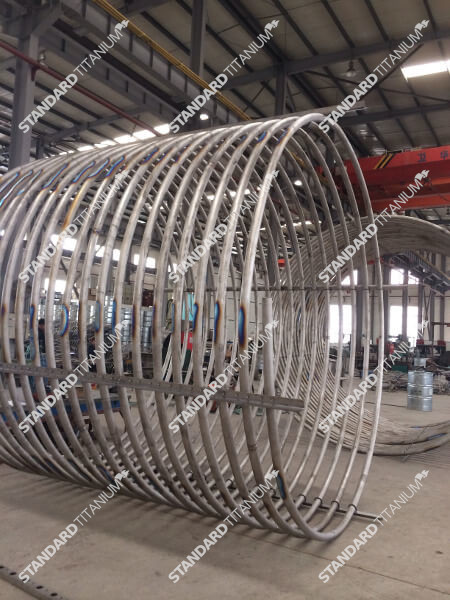

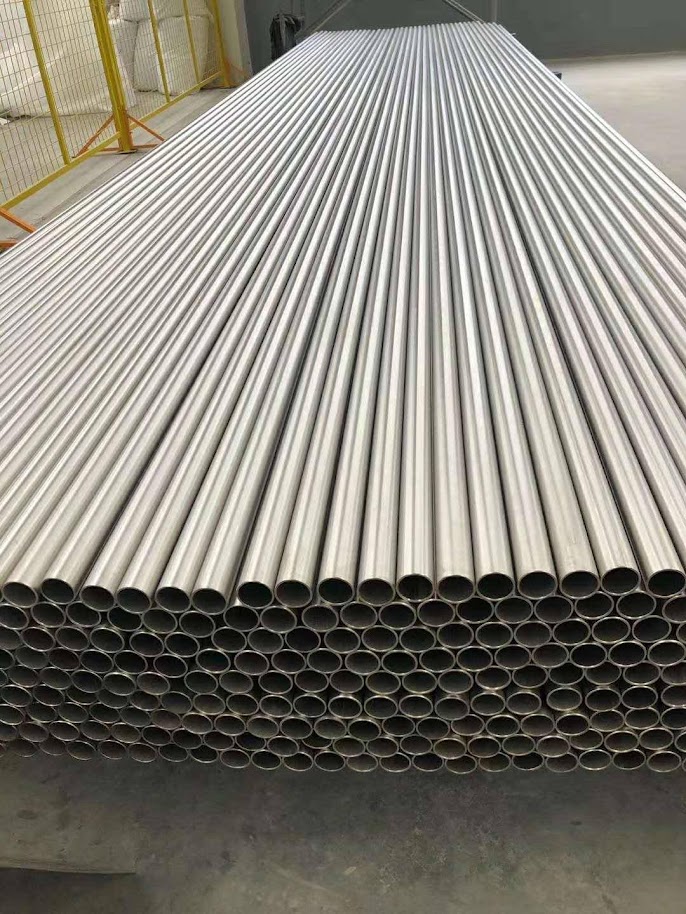

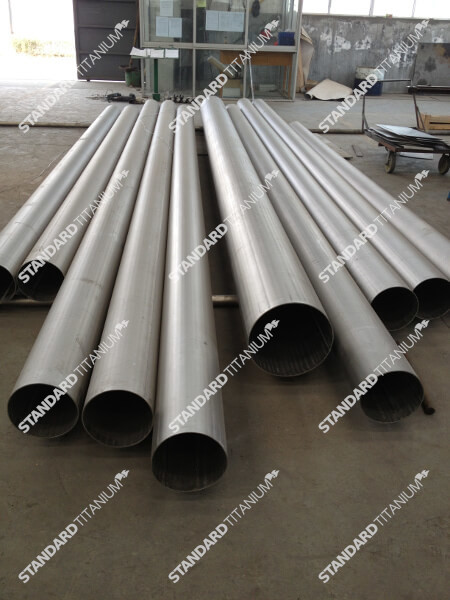
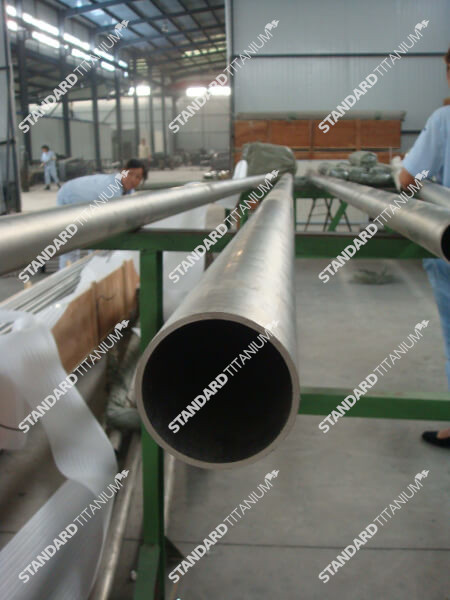
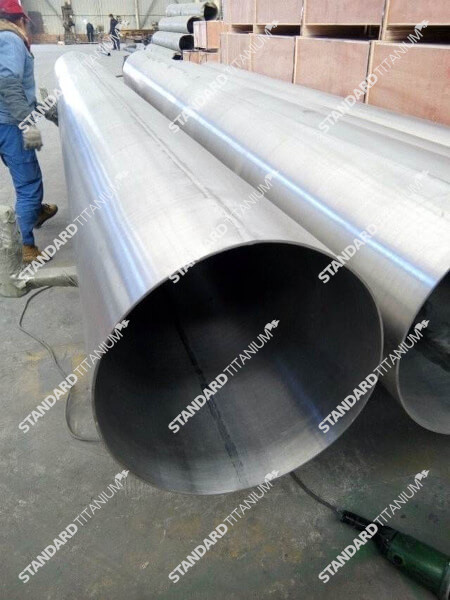
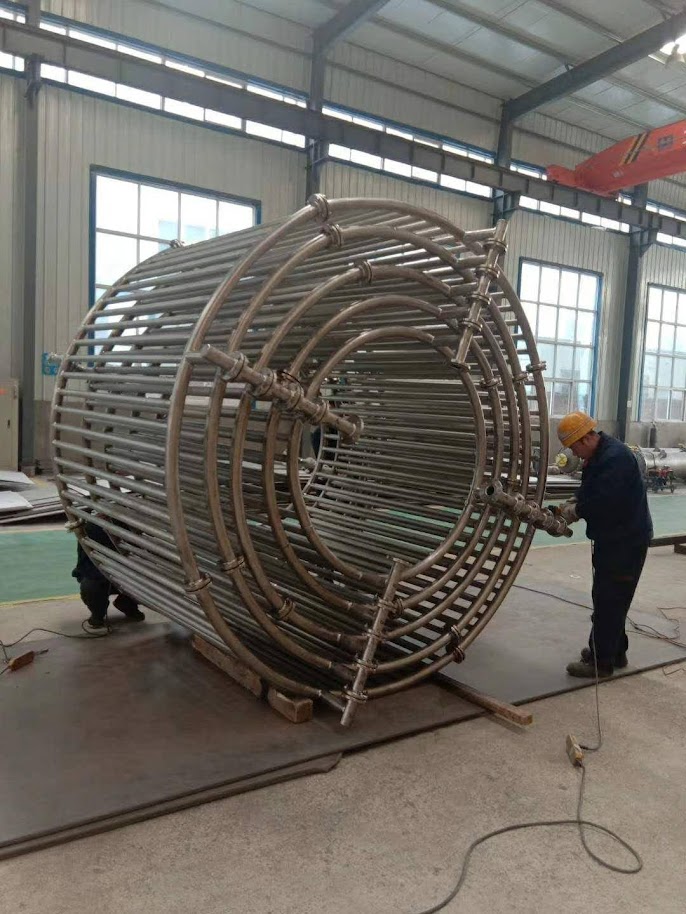



The Standard Titanium production and supply capability. For custom and specialist tubes contact our sales team for further information.
- Ti Tube Standards: ASTM B338, B861, B862, DIN 17 861, AMS 4941, AMS 4942
- Tube Type: Welded Tube / Seamless Tube
- Grade Material: CP Grades 1 – 4, Alloys: Grade 5, 7, 9, 12, 24, 26, 29
- Seamless Tube Dimensions:
- Outer Diameter Range: 0.4 – 340 mm
- Wall Thickness Range: 0.4 – 10 mm
- Length Range: < 18000 mm
- Welded Tube Dimensions:
- Outer Diameter Range: 90 – 5,000 mm
- Wall Thickness Range: 0.5mm – 50mm
- Length Range: < 15000 mm
- Stock: We also follow the National Pipe Standards and hold a large stock to meet immediate demand.
- Shipping: International shipping to all regions and countries, and to standard terms EXW, DDP, FOB, CIF, FAS.
- Prices & Delivery: All orders are individually priced with lead times.Contact us today for a free quote.
Manufacturing Specification
The table below provides and a overview to the tube and pipe range that we manufacture and supply. We also specify many orders against the NPS standard as well as providing bespoke sizing. The choice of welded or seamless tubing is largely governed by the size of tube and the application it is to be used for. It is necessary to specify either welded or seamless along with titanium pipe surface treatment and manufacturing standard. Titanium tubes are available in both seamless and welded forms, with different size ranges.
| Dimension | Outer Diameter | Thickness | Length |
|---|---|---|---|
| Size Range: | 0.4mm – 340mm | 0.4mm – 10mm | Max 18m |
| Manufacturing Standards | ASTM B338, ASTM B861,DIN 17 861 | ||
| Dimension | Outer Diameter | Thickness | Length |
|---|---|---|---|
| Size Range: | 90mm – 5000mm | 0.5mm – 50mm | Max 15m |
| Manufacturing Standards | ASTM B338, ASTM B862 | ||
The production of titanium tubes takes two distinct approaches, one for the production of seamless tubes, the second for welded tubes. The type of tube is determined by the size and the application for use.
Seamless Tube Production
Seamless tube production uses a variety of equipment dependent on the tube requirements and seamless ti tubing is manufactured by either rotary piercing or extrusion.
Rotary Piercing
Titanium Tube Extrusion Rotary piercing tube production is where billet is pushed through a two roller which are convex-tapered rotating in the same direction. The rollers compress the material and a tapered mandrel is set inside the central void. The mandrel forces the titanium outwards and then compresses the material against the back tapered rollers. The tube is then cooled and then cold and hot worked to the desired diameters and specifications.
Extrusion
Extrusion is a process used to create objects of a fixed, cross-sectional profile. A material is pushed or drawn through a die of the desired cross-section. The two main advantages of this process over other manufacturing processes are its ability to create very complex cross-sections and work materials that are brittle, because the material only encounters compressive and shear stresses. The internal cavity is extruded by placing a pin or mandrel inside of the die

Welded Tube Production
The welding process is one of the core ways in which we manufacture titanium tubes. Our high quality tubing starts off as a flat strip of metal. The strip is formed into a tube through a series of rollers and the join, also called the seam, is then welded together.
Standard Titanium supplies titanium tube and pipe in a wide range of grades, sizes and product forms for international customers. Production planning and stock management help us support both standard requirements and shorter lead-time orders where material is available.
Titanium tube production requires close control of forming, welding or seamless processing, heat treatment, dimensional accuracy and inspection. We continue to invest in production capability, process improvement and technical training to maintain consistent quality and reliable supply.
Our titanium tubes are used in applications including heat exchangers, chemical processing equipment, aerospace structures, medical equipment and bicycle frames. Contact our team to discuss your grade, dimensions, specification and delivery requirements.


Titanium pipes are a common mill product used in the manufacture of a wide range of products and applications. From medical implants to large industrial heat exchangers, through to use in aircraft component structures. In recent years we have seen an increased demand from steel fabricators who now view titanium as a real alternative to meet the demands for stronger and lighter and cheaper metal tubes.





